
Most advice on content marketing strategy for a new website sounds like a training plan for an athlete: publish daily, post on five platforms, never miss a day. Someone with a job or a family can follow that for two or three weeks. Then a busy week arrives, the streak breaks, and the site goes quiet.
A content marketing strategy for a new website works better when it is small enough to survive a bad week. This article lays out one: a single publishing rhythm, one main type of content, and one reader to write for. It also covers what to expect in the first six months, because the timeline matters as much as the plan.
Why the “publish every day” advice wears new site owners out
Daily publishing is advice borrowed from established media sites with staff, editors and years of archives. A beginner working alone in the evenings has none of that, so the same advice turns into a quality problem. When you have to publish something every day, you write whatever is quickest, and quick articles tend to be thin.
The multi-channel version is worse. Each platform has its own format, its own audience habits and its own upkeep. A new site owner who splits limited hours across a blog, a video channel, a newsletter and three social accounts ends up with five weak presences and no finished body of work.
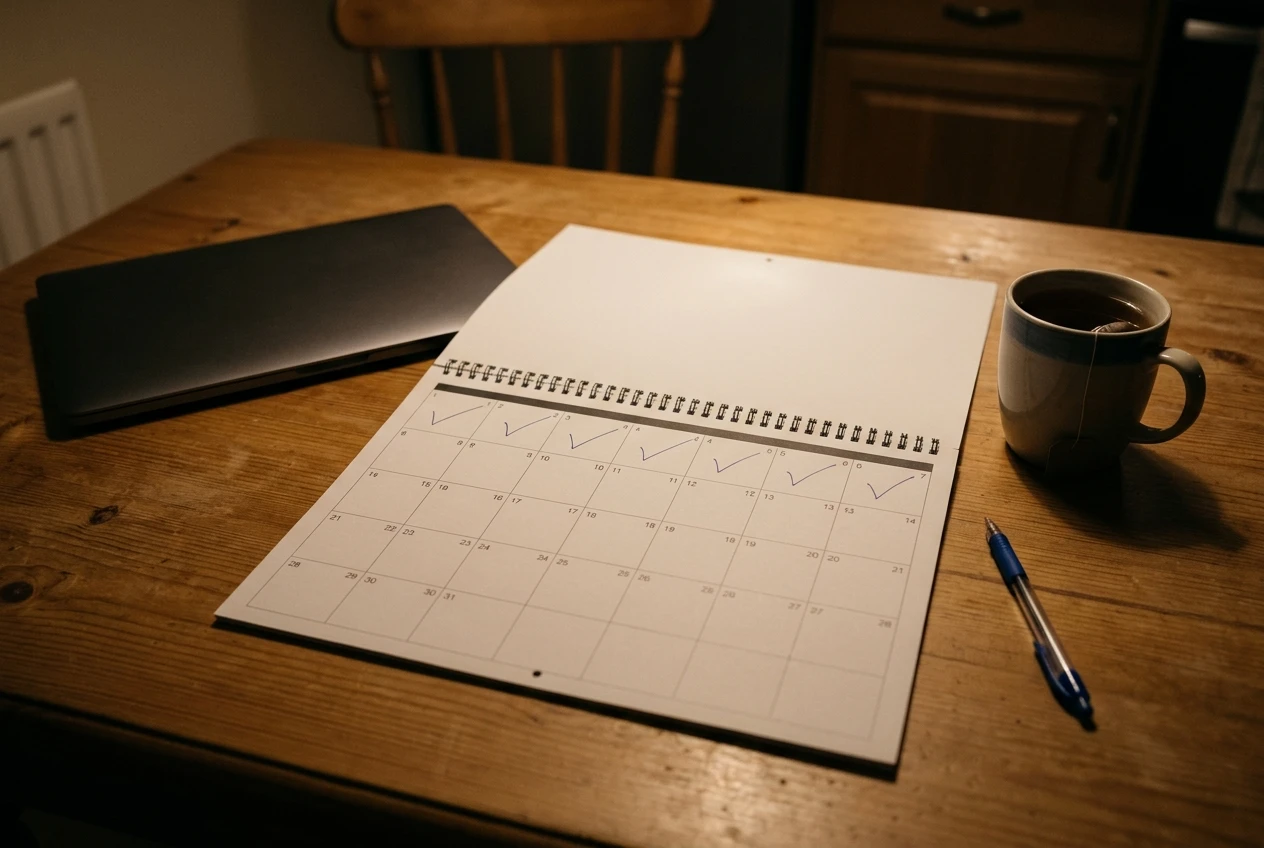
The cost is also easy to overlook. Burnout rarely arrives as a dramatic collapse. It shows up as a skipped week, then a skipped month, and the site is quietly abandoned with a dozen half-written drafts. A slower plan you can still follow in month eight is worth more than a fast one that stops in month two.
Pick one reader and one question before you write anything
Before you plan a single article, write down who the site is for and what that person is trying to figure out. One sentence is enough: “A complete beginner who wants to earn online and is worried about scams and slow results.” That sentence becomes a filter. If a topic does not help that person, it waits.
The question matters as much as the reader. Readers arrive with something specific to solve, such as “How much does this cost?” or “Which option should I pick first?” An article that answers one question completely is more useful than one that touches ten.
If you have not settled on a topic area yet, work that out first. My article on how to choose a profitable niche covers it for people whose interests do not obviously look like a business. Everything below assumes you have at least a rough niche and can name the person you are writing for.
The three kinds of articles a new site actually needs
A new site does not need a dozen content formats. Three cover most of what a beginner reader looks for, and sticking to them keeps planning simple.

- Answer articles. These respond to one specific question in plain language, such as “What tools do I need before I start?” They are the easiest to write because the structure is the question itself.
- Comparison and review articles. Readers who are close to a decision want to see options side by side, with honest limits stated. These build trust when they include what a product does poorly or what it is not suited for.
- Step-by-step guides. These walk through a process in order, such as setting up a first site or choosing a first topic. Readers return to them because they do the task alongside the article.
Over time, answer articles bring in readers with early questions, comparisons help readers who are weighing options, and guides help readers who have decided to act. A site with a few of each covers a reader’s path from curiosity to decision without any extra formats.
Pick one of the three as your main type, at least for the first few months. If answer articles come most naturally, make most of your posts answers and add a comparison or guide when a topic clearly calls for it.
A weekly routine that fits into a few hours
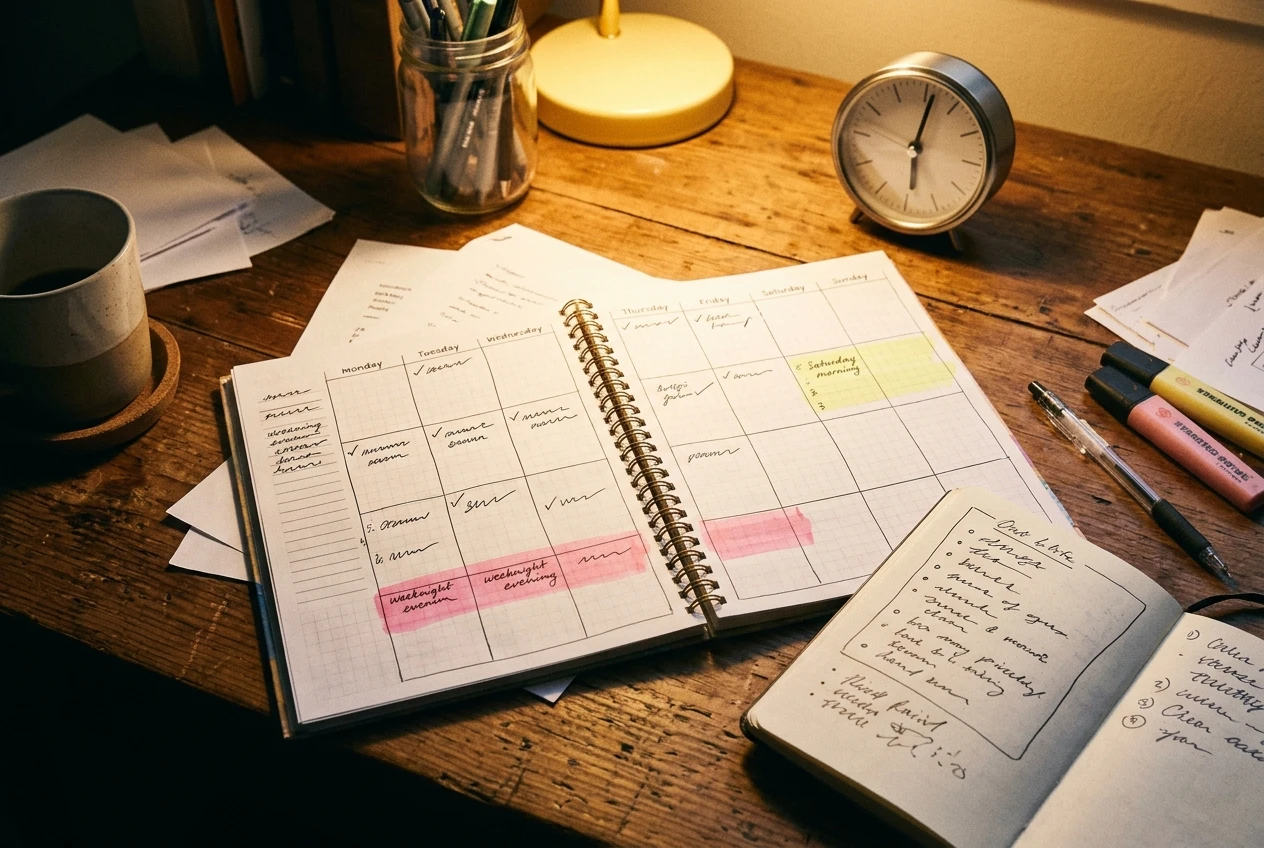
The routine below assumes one new article per week and about four hours in total. Adjust the hours to your life, but keep the order, because the order is what removes decisions on the days you are tired.
- Choose the topic (20 minutes). Pick the next question from your list. Write the one-sentence answer first. If you cannot state the answer, you need more research before writing.
- Outline (30 minutes). List the headings a reader would expect, in the order they would ask the questions. Three to six headings is plenty for most articles.
- Draft (about two hours). Write without editing. Fill each heading with specifics: steps, examples, limits. Leave polishing for later, because stopping to fix sentences is where drafts stall.
- Edit and publish (45 minutes). Read it aloud once. Cut sentences that repeat each other, check that every claim is one you can stand behind, and add a link to a related article on your own site where it helps the reader.
- Reuse (30 minutes). Turn the finished article into one or two smaller pieces, covered in a later section.
Put the sessions on the calendar at the same times each week. A fixed slot, even a modest one like two weeknight evenings and a weekend morning, takes less willpower than deciding each week when to write. If a week falls apart, publish nothing that week and return to the routine on the next slot rather than writing double to catch up.
How to find topics without chasing trends or burning through ideas
Trends are tempting, but a beginner site rarely benefits from racing to cover news. The questions your reader has in month one are mostly the same ones they will have next year, which means articles that answer them keep their value.
Good topic sources are close at hand:
- Questions beginners ask in communities and comment sections. Keep a running note and add every question that appears more than once.
- Your own list of “I wish I had known” points. Anything that confuses a newcomer is a candidate, as long as you write it from what you actually know rather than guessing.
- Search suggestions. Typing the start of a question into a search box shows related phrasings people use. These often reveal better wording than your first guess.
- Gaps in your existing articles. Each article tends to raise a follow-up question. If your pricing article mentions free versus paid features, a deeper article on one of those features is an easy next topic.
Keep the list in one place and aim to have at least four topics queued at all times. Having the next topic chosen in advance is what keeps step one of the routine at twenty minutes instead of an hour of scrolling.
Reusing what you have already written instead of starting from scratch
Each article contains more material than a single post uses. Reusing it is how a once-a-week schedule can still feel productive.
A few ways to do it without repeating yourself:
- Pull a short summary from the article and use it as the intro to a newsletter issue or a social post that links back.
- Expand one section that deserved more room into its own article. A paragraph on tools in a getting-started guide can become a full article on tools.
- Update older articles when something changes or you have a better example. A refreshed article often serves readers better than a new, thinner one.
- Link related articles together. When a new article touches a topic you have already covered, point readers to it. For example, someone reading about content planning may also want my guide to the tools needed to start an online business, since the two questions tend to come up around the same time.
Reuse also lowers the pressure to produce something new every time. A site with fifteen well-connected articles is easier for readers to navigate than one with thirty isolated ones.
What to expect in the first six months, and what I would not worry about yet
A new site takes time to get noticed. Search engines need to find your pages, and readers need a reason to come back, so the first months often bring very little traffic regardless of how well you write. That is a normal stage of a new site, not evidence that the plan is wrong. I will not promise a date when traffic or income appears, because it varies with the niche, the competition and how consistently the work gets done.

What you can control in six months is the body of work. A reasonable aim is a steady stream of finished articles, each answering one question well, with sensible links between them. If you publish weekly, that adds up to a real library by the end of the period.
Things I would not worry about yet:
- Daily traffic numbers. Checking them constantly in the early weeks mostly produces discouragement. A look once a month is enough.
- Perfect design. A clean, readable layout is sufficient. Readers care more about whether the article answers their question.
- Every social platform. One extra channel is optional. Several are a distraction while the site is still small.
- Matching other sites’ output. Sites with large teams publish at volumes you do not need to copy.
What is worth attention early: whether you are following the routine, whether each article answers a real question, and whether you are being honest about what you know. If you keep those three going, the rest has room to develop.
Where Wealthy Affiliate fits into building the habit
A routine is easier to keep when the pieces you need sit in one place. Wealthy Affiliate puts training, a website and a community together, so you can learn a step, build it on your site and ask questions without switching between unrelated tools. For a beginner with limited hours, fewer moving parts means more of the week goes to writing.
I recommend it for the reason this article is about: it supports a steady habit rather than a rush. You can start with a free account, look at how things work, and decide whether it fits your situation. If you are comparing costs, my breakdown of what you get free versus premium sets out the differences so you can judge before committing to anything.
Results still depend on the work you put in and the judgment you bring to it, and no platform changes that. What Wealthy Affiliate does give you is a Writer that drafts your articles and an Artist that makes your images, alongside the training, the website and the community. You plan the piece, review and edit what comes back, and publish, instead of starting from a blank page. That helps most on the weeks when motivation is low.
If you want a place to build this routine with training, a website and a community in one spot, you can start with a free Wealthy Affiliate account through my link, look around, and decide at your own pace.